
By Anne Wainscott-Sargent
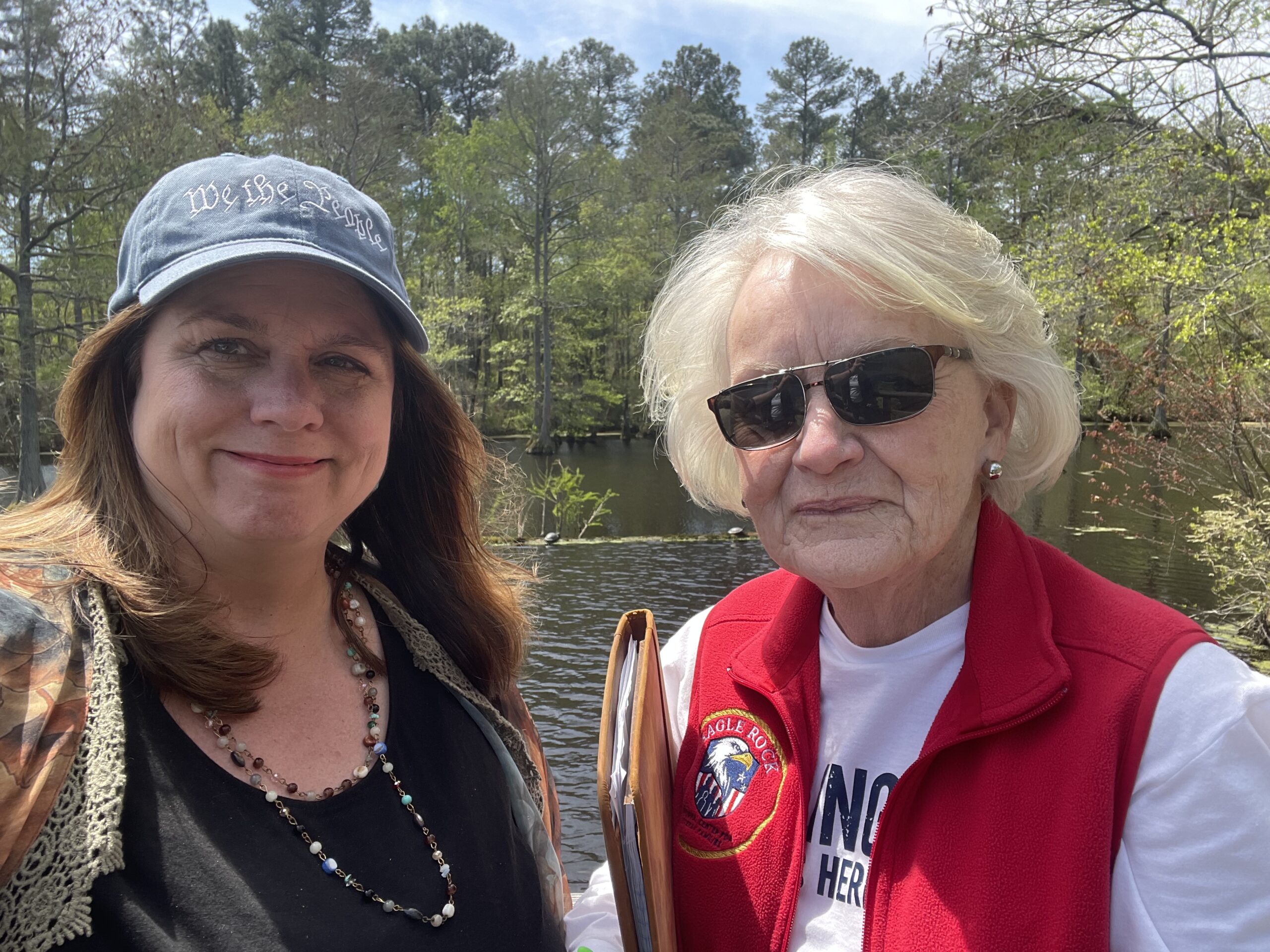
As the new communications consultant for Eagle Rock National Center for Veteran Families, I was invited to spend three days at a family retreat reunion in rural North Carolina. I didn’t know what to expect — but from the moment Lynn Marilla, Eagle Rock’s founder and CEO, picked me up at Raleigh-Durham Airport for the hour-and-a-half drive to North Carolina’s Sandhills region, I sensed something special was ahead. We arrived at tall pines, rustic cabins, and clean, open water.
Lynn, who comes from a military family herself, founded Eagle Rock 13 years ago to help veteran and active military couples and families stay together, in response to the growing rates of divorce and suicide experienced by service members who’ve faced multiple deployments and prolonged separation from loved ones.
In that time, she’s built something remarkable. From the veteran couples who facilitate and coach families throughout the week, to the volunteers who bring joy and energy to the program, Eagle Rock operates more like a family unit — one committed to giving returning families the most precious of gifts: time and space to reconnect, and the tools to stay connected and resilient even in hard times.
Here are some of the people and stories that emerged during my brief time with this extraordinary group.
Becky and David Parker — From Retreat Participants to Staff
Becky and David Parker’s Eagle Rock story also began as participants. David had just returned from a long deployment to Kuwait with the National Guard, and their family was quietly struggling to find a new rhythm. Every deployment had changed their routines, and every homecoming required adjusting to a new normal — made more complex by four children who each coped in very different ways.
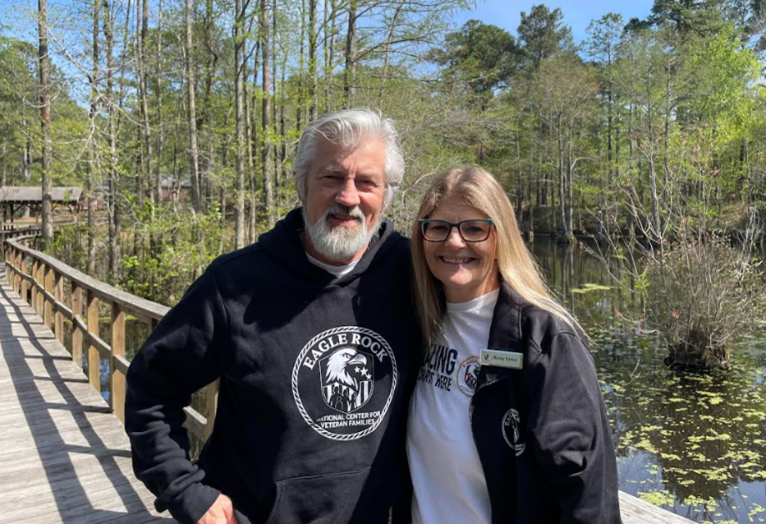
They arrived unsure what to expect, but the sessions quickly resonated. “When we came to class and they were talking to us, I thought, ‘Wow,'” recalls Becky, “because everything they were saying applied to us.” Their teenagers, initially reluctant to attend, ended up forming lasting friendships with other military kids who understood what they were going through.
For David, being around other soldiers in a family setting — not just in uniform — helped him see the value of real “family fun” with people who could relate to their experiences. Some of that fun was on full display at the retreat’s talent show, where David showcased some impressive impromptu songwriting alongside Kevin.
Over time, Becky moved from participant to devoted volunteer and eventually to a staff role leading Eagle Rock’s children’s programming — a natural fit for someone who homeschooled four children through multiple deployments. Her passion for kids was immediately obvious as I watched her manage a lively room of five-to-seven-year-olds.
One of her favorite tools is the talking stick: the person holding it has the floor to speak without interruption — a simple but powerful way to ensure every family member feels heard. “It taught us to listen to each other,” she says.
For Becky, success looks like kids who arrived shut down beginning to laugh, open up, and reconnect with their parents by week’s end.
Eric and Jessica — Returning Retreat Participants
For Eric, Jessica, and their five children, this was their second Eagle Rock retreat — and it felt a bit like coming home. Eric balances his role in the National Guard with a civilian job, and the family hadn’t managed a true vacation in the two years since their last visit. That’s part of why Eagle Rock has become something close to a family getaway — not a vacation in the traditional sense, but a rare chance to unplug from work, schedules, and constant demands, and focus on each other.
“It’s an opportunity to just unplug from everything else in life and focus on ourselves and our family,” Eric says.
With the cabins now arranged in a circle that naturally draws families together, the kids slipped into play almost immediately, reconnecting with old friends and forming new ones. Jessica describes the retreat as “really a refreshing time for the family” — a reset that helps them bond with other military families while also realigning their own relationship.
For Eric, revisiting the retreat’s communication tools with more life experience and more deployments behind him has sparked new insight. He’s gaining a clearer understanding of why he reacts the way he does, and how to more effectively shift from a military mindset into his role as a husband and father at home. “I’ve had some ‘aha moments,'” he admits.
Jessica appreciates that the content isn’t just theoretical — it speaks directly to the realities of parenting five kids while navigating deployments and the strain of distance. She often finds herself wishing more families, not just military ones, could access the same tools and community.
Lillyan — Volunteer and Former Retreat Participant
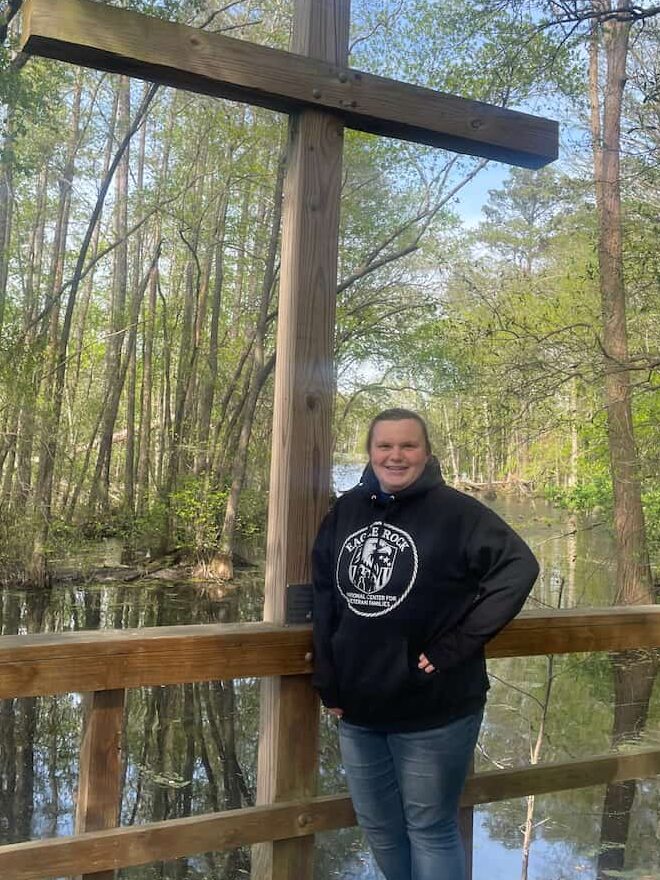
Lillyan, a Wisconsin native, first came to Eagle Rock in 2017 as a high school senior, when her father was still serving in the military. What struck her then — and keeps drawing her back now as a regular volunteer — is how Eagle Rock creates rare, intentional time for families to simply be together. “There’s not often time where the family gets to settle down,” she reflects, “but at Eagle Rock they can leave and escape the busy world and come together.”
Now 26, with a degree in child psychology and a minor in music, Lillyan volunteers at multiple retreats each year. She loves Eagle Rock’s model of parallel programming — parents and kids each have their own age-appropriate sessions in the mornings, giving couples space to work on their relationship while “the kids just get time to be kids” — before coming back together as a family.
Inspired by her own experience as a military child and as a sibling of someone with a chronic illness, Lillyan dreams of one day running the kids’ program at Eagle Rock. She sees her ongoing volunteer work at Eagle Rock as the natural next step toward that calling.
A Memorable Farewell
On the last morning of the retreat, Lynn addressed the couples with her deepest hope: that every military and veteran family who comes to Eagle Rock “feels truly seen, supported, and never alone once they leave.”
She reminded families that encouragement doesn’t end when the week does — Eagle Rock’s growing aftercare program means continued support through phone calls, Zoom, and other outreach. And she gave the group a glimpse of an ambitious future: Eagle Rock’s plans to grow its footprint nationally and, ultimately, to purchase or build a permanent retreat home.
“Eagle Rock has always had a dream to be a national organization,” Lynn said. “It’s taken a lot of years to get here, but we’re here. The future is to buy and build our own facility — or find something already built that we can make our home — so we can keep welcoming more families, year after year.”